One of the greatest benefits of travel—especially for someone interested in cities and communities—is seeing what’s possible elsewhere. When you step into a place that works, you feel it immediately. The flow, the energy, the way people use the space—it all tells a story.
That was my experience recently in Cardiff, Wales.
Cardiff’s waterfront is a powerful example of what happens when vision, leadership, and execution align. This was not an easy site to develop—an inhospitable stretch of waterfront that could have easily remained underused. Instead, the city clearly committed to a thoughtful master plan that transformed the area into a place people actually want to spend time.
What stood out most was how intentionally the waterfront is framed. Museums and galleries border the area, creating natural anchors for culture, curiosity, and foot traffic. It’s not just somewhere you pass through—it’s somewhere you linger.
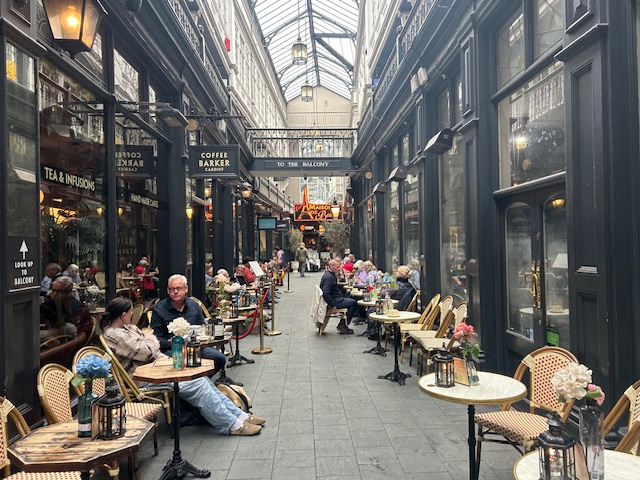
Just across from Cardiff Castle, I discovered a particularly memorable example of placemaking: an open-ended shopping and dining arcade that felt both elegant and approachable. Largely protected from the elements, the space offered a mix of interesting shops and intimate dining spots—some indoors, some spilling outside. It wasn’t flashy or overly curated. It was charming, comfortable, and deeply human. The kind of place where a glass of wine and a simple meal feel exactly right.
What struck me most was that it didn’t feel touristy. It felt lived-in. Familiar. Like somewhere locals actually choose to be. That, to me, is the mark of successful placemaking.
This theme continued as I travelled through England and Iceland, where I noticed the growing role of food halls as dynamic centres of community life. One standout was The Old Dairy in Selfoss, Iceland. Selfoss is a small town—just over 10,000 people—but the food hall sits right at its heart, buzzing with energy.
It was fun, social, and welcoming. A place where people gather, connect, and spend time—not because they have to, but because they want to. Selfoss is a reminder that population size isn’t a limitation. With the right intent and design, even small communities can create engaging, meaningful hubs.
Great placemaking isn’t about grand gestures or iconic architecture alone. It’s about understanding how people move, meet, rest, and connect. When it’s done well, the space doesn’t demand attention—it earns it.
And when it’s done really well, it feels like home—even when you’re far from it.